
looking for a tree
A story about grief and loss

cover photo: a wall painting (mural?) done by my second cousin!
🫶
A week ago I made a post on the Chinese social media looking for a tree.
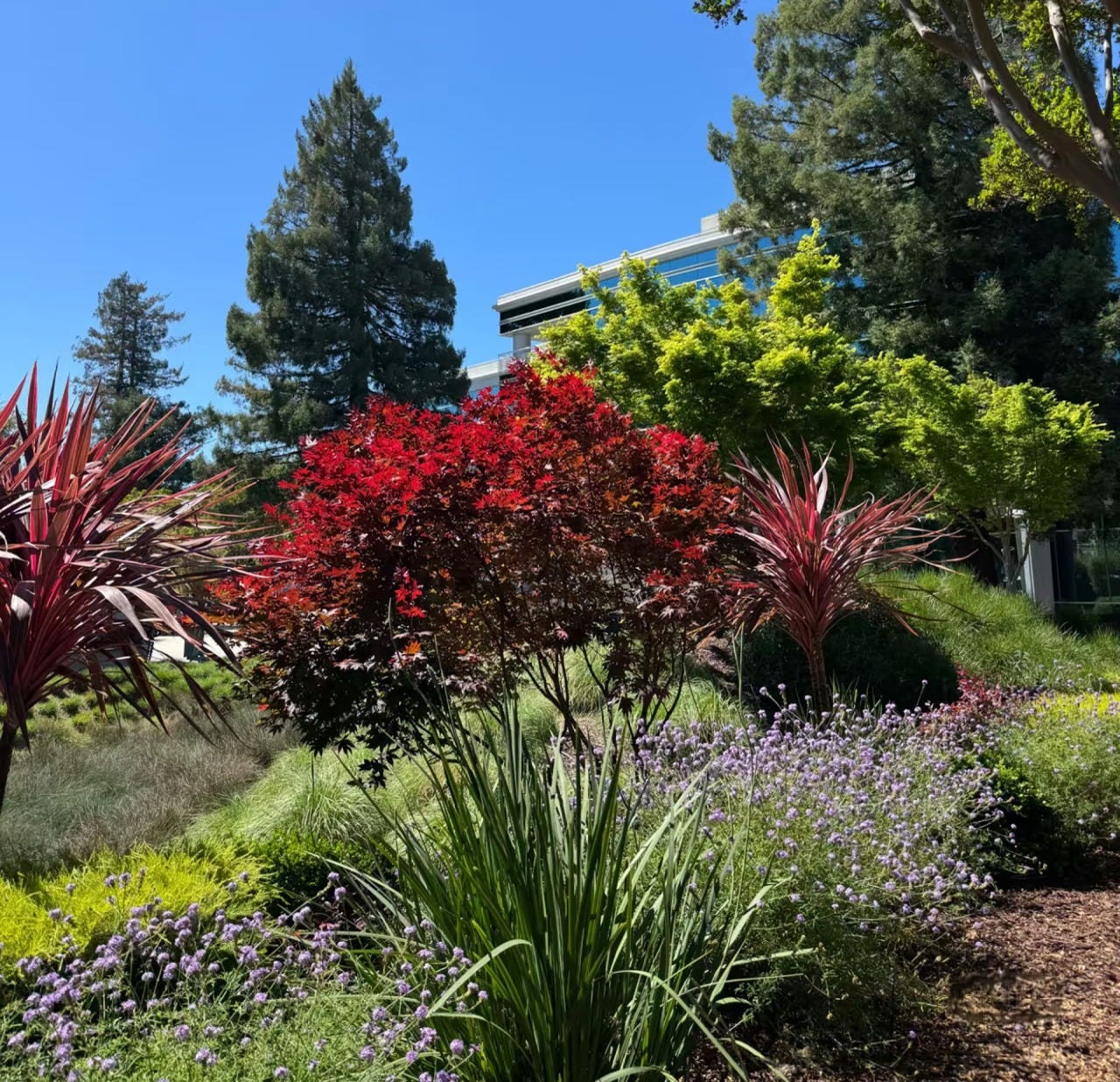
Not just any tree, but a six-year-old Japanese maple, last seen in the parking lot of a corporate office in Sunnyvale, California. I had almost no useful information to offer: only a photo from the day it was first planted, and the rough location pin Apple Maps had generated from that photo.
Strangers sent comments and private messages with new photos of the tree as it looks now. One person said they had biked past it that morning and stopped to take a picture. Another went at dusk, when the light made it look especially beautiful. Someone else photographed it from multiple angles, another person sent over videos…
It was beautiful.


I hadn’t thought about this tree in some time. Not until my recent trip into the mountains with my parents to visit my grandparents’ graves. It was Qingming, a traditional Chinese holiday of remembrance and celebration of the newness, although I don’t think I ever fully understood the second part. All four of my grandparents left relatively early in my life. My paternal grandfather, my ye ye, passed away during Covid, while I was in Berkeley, which meant I never saw him for the last time. We went back to the village where ye ye used to live, where my dad grew up, and where most of his siblings still are. Since moving back to China, I’ve found myself unexpectedly drawn to these villages I barely remember. At first, I thought it was the mountains, or the slower rhythm of the place. But I think it is more than that. It’s human nature to want to know more about what shaped your family before they shaped you, I suppose.
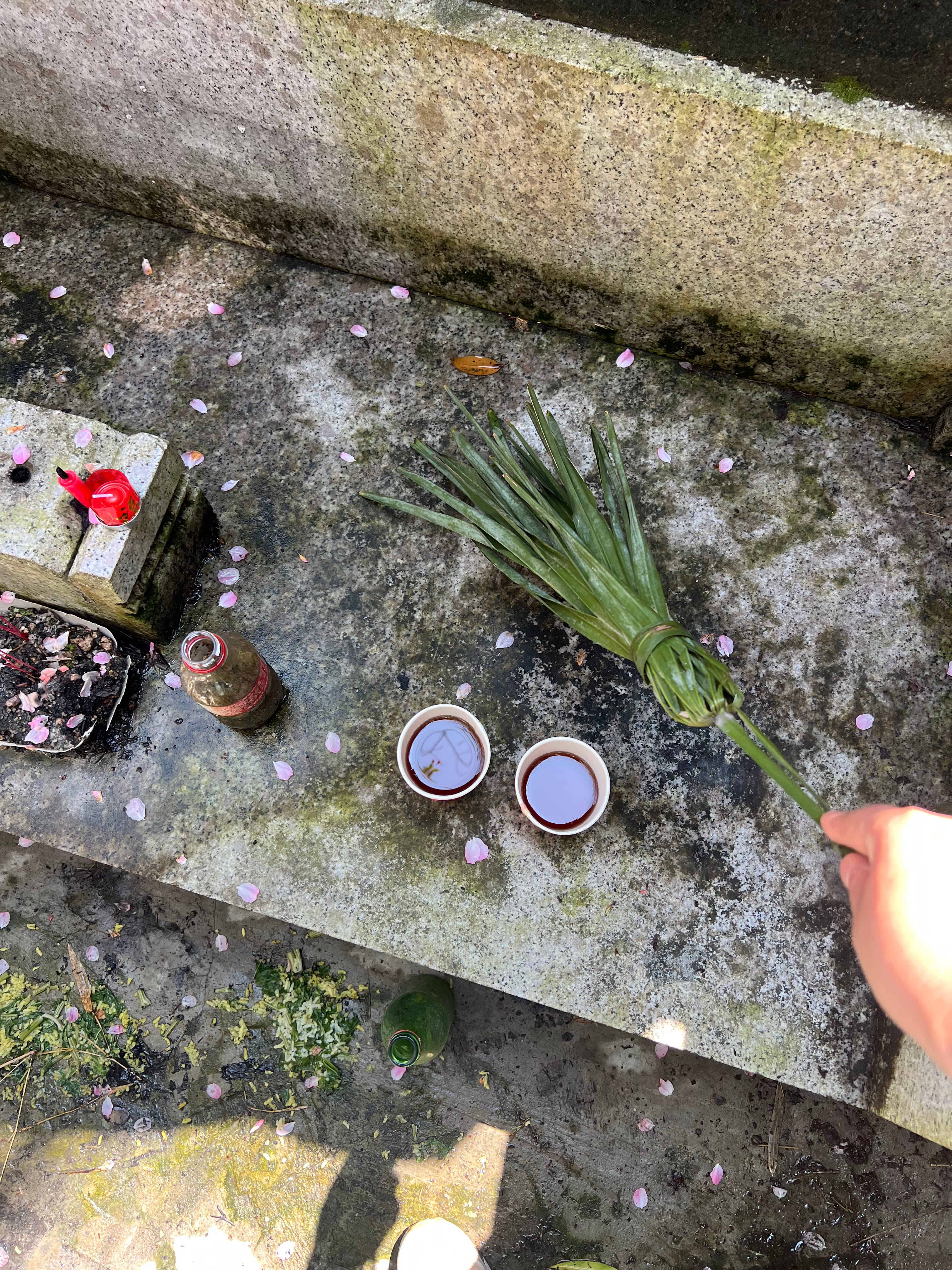
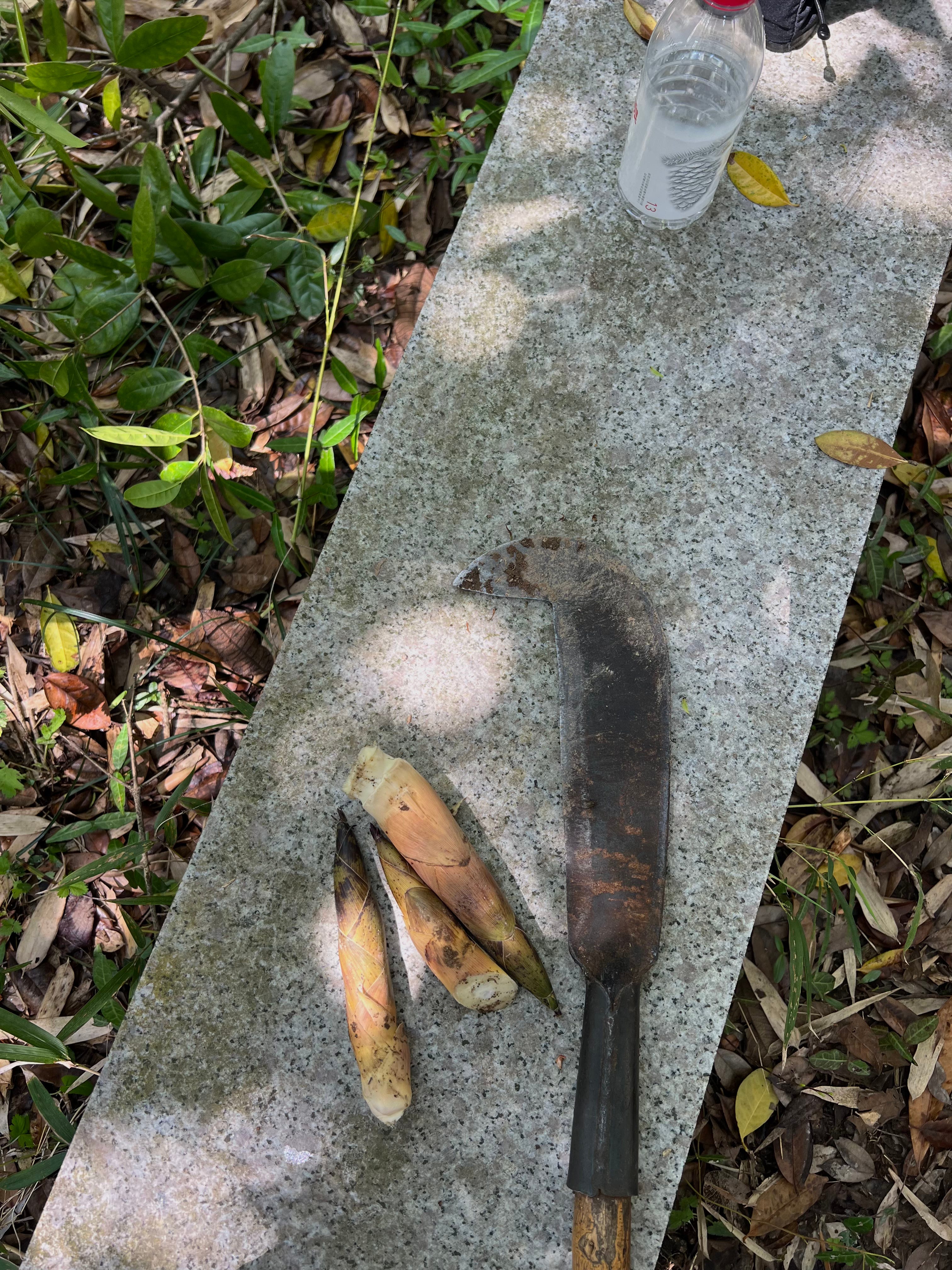
When we arrived, my ye ye’s house was locked. The persimmon tree that’s probably older than most of us there was still standing in front of the house. It was just starting to leaf out, it seemed like. From there we started the hike to the graves. There was a fish pond half away there. Some farmers were picking put the pre-Qingming tea leaves, which are known for the more tender buds and subtle aromas. At the graves, we all went to work. My cousin, an arborist, pulled weeds and cleared overgrowth. He handed me his electric gardening shears, which I became addicted to almost immediately. My mother set out the food and wine we had prepared in advance, for my grandparents to enjoy in heaven. The other adults swept with willow branches. The children dug for spring bamboo shoots in the grove.
My parents told me that since their parents died, the siblings do not gather the way they used to. There are fewer reasons now, fewer occasions that naturally pull everyone back into one place. And yet every Qingming, everyone comes. As someone who had been an absent family member for the last decade or so, I felt strangely ecstatic. I liked putting on what I can only describe as my new adult goggles and observing my distant relatives. I could understand only half of what they were saying, but that didn’t diminish how vivid and distinct each of them seemed. Their personalities came through anyway.
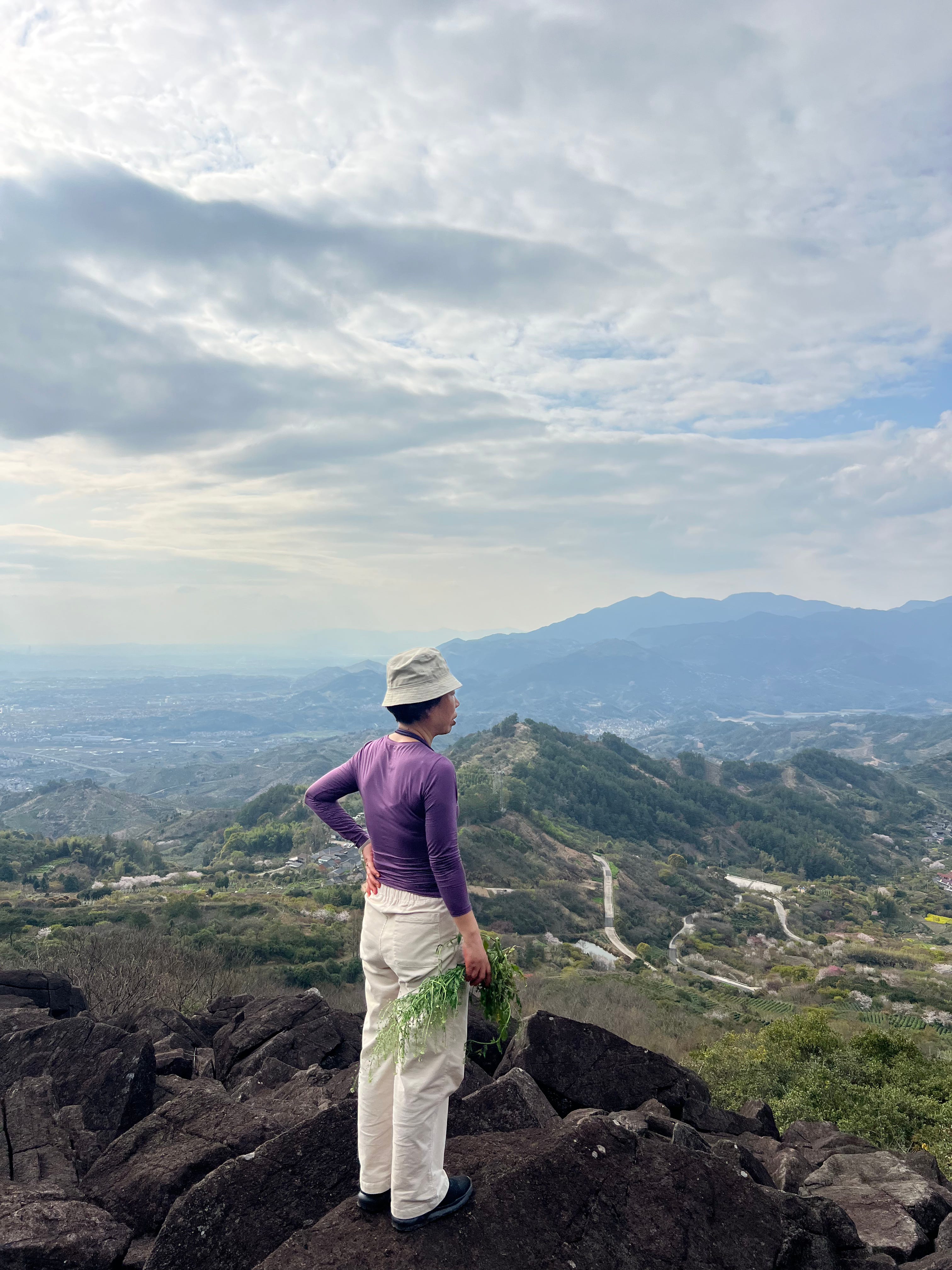
After the visit to the graves, my arborist cousin suggested the whole family go hiking. The hike was way less paved and “just an easy walk” than I expected. It turned out we were basically scrambling over rocks and climbing our way up the mountain with some loosely defined trails as a backup option. I was kind of surprised how everyone, young or old, kept climbing. Even my parents, who have never been especially athletic or outdoorsy, dressed casually in jeans and street clothes, made their way to top of the rocks. At some point we all laughed. Part of it was probably the ridiculousness of this rogue hike. Part of it was relief. I couldn’t fully imagine the emotional weight everyone had just carried, but for the first time, I felt I understood why Qingming arrives in spring. It’s about renewal and celebration of life as much as about remembrance.
When I got home from the trip, I ran to make the post. The post went something like this:
Years earlier, a tree was planted for my college friend B.
We had gone to the same small liberal arts college on the East Coast, though she was a year ahead of me. To me, she was one of those people who seemed to contain more life than everyone else around her: bright, energetic, generous, impossibly competent. She studied computer science and philosophy. During my first year, I was assigned to the dorm floor where she was the house adviser, and that was how we became friends.
After graduation, we both drifted west to the Bay Area. She was working in tech in South Bay and I was in San Francisco. By then, we did not see each other often. Then, in November 2019, just before Thanksgiving, during my first semester at Berkeley, our mutual friend messaged me: Are you free? There’s something I need to tell you.
I could guess the beginning of the conversation, but not the end. She told me that B had taken her own life the week before.
For a long time, I could not tell the full story of her death. Her family chose, for reasons of their own, not to make it public, and so the grief became private and shapeless too. My mind was crowded with whys and what ifs. I did not know who to talk to. I did not know what to do with the fact of it. I carried it alone more than I should have.
A few months later, at a Lunar New Year gathering, I happened to meet a girl who worked at the same company as B. On a whim, I asked if they might have known each other. A few days later, she messaged me to say that the team was holding a small memorial for B, and that friends and family were welcome.
I remember arriving in Sunnyvale on a warm January afternoon, driving down from San Francisco. I listened as her coworkers spoke about her dedication at work, and her family told us about the story of how she got her name. For a little while, it felt as though she had returned.
At the end of the memorial, a group of us walked out to a patch of dirt beside the parking lot.
And there, one shovel at a time, we planted the tree.


Six years have passed. I didn’t intend to write a sad story, instead, something about hope. The maple had grown much taller. Its branches had opened outward. Around its base were flowers and patches of grass. It was no longer just the thin sapling we planted in the corner of a parking lot. It had acquired its own seasons, its own rustle in the wind, its own small patch of shade where someone might pause without knowing why. It had become a real tree, not just a symbol.
What moved me was not only that it had survived, but that it had gone on living beyond the meaning we first gave it. We planted it in grief, but the tree had not remained inside that grief. It had become part of a landscape, carrying a history that most people would never know, and somehow that felt exactly right.
I used to think remembrance meant holding on. Now I think it may also mean learning how to notice what keeps living.
Like the bamboos, like the persimmons, like the maple tree.
miss you, B. xx
this is beautiful and reminds me of a friend that I had who passed away in a similar manner years ago